

“Callergy”—the psychological and professional aversion to real-time verbal communication—has evolved from a social preference into a quantifiable financial liability. While digital tools promise efficiency, callergy in the workplace has birthed a silent operational crisis: 42% of Gen Z and Millennial employees now refuse to answer phone calls.
For HR leaders and executives, this is not merely a generational quirk. It represents a systemic bottleneck that slows decision-making, increases workplace friction, and directly erodes company profitability.
Avoiding phone calls is no longer just a personal preference; it is a career-limiting habit that stifles business growth. Data from the self-improvement app RiseGuide, which surveyed 2,000 young professionals, reveals a staggering financial penalty:
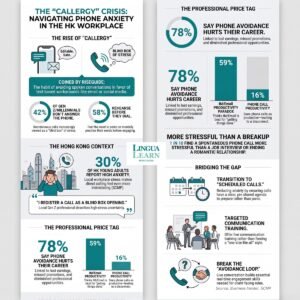
78% of workers who avoid spoken conversations believe that callergy in the workplace has directly cost them earnings or promotion opportunities.
Talent retention and business growth are throttled when staff retreat into purely text-based communication channels.
“Unfortunately, avoidance often creates bigger problems than the conversation itself. We miss opportunities, strain relationships, and spend unnecessary time and energy worrying about issues that could have been resolved through a direct discussion.”
— Jaimee Campanella, Time Strategist & Productivity Consultant at RiseGuide
The psychological weight of unscripted, real-time engagement has reached a critical tipping point in corporate environments.
1 in 10 respondents rank a spontaneous phone call as more stressful than a romantic breakup or a high-stakes job interview.
This shift highlights an internal hierarchy where routine verbal exchanges are viewed as high-pressure events. Because business operations are inherently dynamic, relying exclusively on curated, text-based messages leaves employees ill-equipped to handle real-time problem-solving.
Anxiety around unlisted callers creates severe operational friction across departments. Adrian Poon, a Gen Z HR professional, describes incoming calls from unknown numbers as a “blind box opening,” admitting he only answers when actively in “job applying mode.”
When internal gatekeepers like HR staff exhibit this mindset, your organization faces critical risks:
Invisible Potential: Missing high-value external talent, client leads, and B2B partners who lack an established digital footprint.
Recursive Communication Loops: Ignoring incoming opportunities simply because they bypass pre-approved text platforms.
Even when employees do pick up the phone, internal anxiety creates productivity drag across teams:
58% of Gen Z and Millennials feel compelled to script or rehearse conversations before dialing.
Artificially Inflated Response Times: Spending 15 minutes scripting a two-minute inquiry wastes cumulative organizational hours.
Erosion of Spontaneous Leadership Skills: Over-reliance on written scripts prevents employees from building real-time negotiation and crisis-management abilities.
Digital workarounds like email, Slack, and text messaging create an environment where every response can be edited, delayed, and polished. Jaimee Campanella notes that these platforms offer “countless ways to delay real conversations.”
By falling into the Editing Trap, employees avoid the initial discomfort of unscripted dialogue. Over time, this avoidance leads to severe communication skill atrophy, turning routine business conversations into overwhelming hurdles.
| Strategy | Action Step | Operational Benefit |
| Institutionalize Training | Implement proactive verbal communication workshops. | Builds employee confidence and stops workplace skill atrophy. |
| Normalize Brief Calls | Encourage 2-minute voice check-ins over lengthy Slack threads. | Accelerates problem-solving and reduces daily friction. |
| Define Channels | Establish protocols for when email is sufficient vs. when a call is required. | Eliminates guesswork and speeds up organizational response times. |
Silence is costing your organization time, promotions, and revenue. Lingua Learn Communications Training equips your workforce with the real-time verbal skills needed to resolve friction fast, navigate unscripted calls, and build executive presence.
👉 Schedule a Free Communications Strategy Call with our Consultants
(Source: Business Insider, SCMP)



© 2026